
Rethinking Curriculum – The importance of the expressive arts and how they can support the whole curriculum

Join us for an insightful session hosted by Rethinking Curriculum, where we champion the importance of high-quality expressive arts across the curriculum. Discover how creative arts can break down the barriers of outcomes-driven curriculum design. Hear from an expert panel as they explore why engaging with the creative arts is essential for primary schools and how these opportunities can enhance the learning experiences of our students.
Rethinking Curriculum – How to include your pupils in curriculum choices

As curriculum expectations evolve, it’s easy to overlook the key stakeholders in curriculum reform—the young people! Our work with Rethinking Curriculum highlights the significance of creating opportunities for student agency and voice when designing your school’s curriculum. In this session, practitioners and researchers will discuss why this is crucial and how you can implement it in your school. They will share their insights and experiences, including how they’ve overcome challenges, to empower you to adopt these practices in your own setting.
Rethinking Curriculum – How can we ensure a curriculum nurtures wellbeing and belonging?

We know that wellbeing and belonging directly impact young people’s outcomes and sense of worth within schools, yet it is often forgotten or an afterthought to whole school curriculum design. In this session, hear from experts across the education sector around why they believe that this work must be a starting point and how you can implement changes in your school.
What is a Chartered Teacher?

Join our Teacher Assessment Manager Helen Barker and a panel of Chartered Teachers from a range of phases and contexts. The panel will reflect on the process of becoming Chartered, the value of critical reflection and deliberate practice, as well as the impact on their teaching and career.
Evidence-Informed Wisdom

In this webinar, Dr Claire Badger will look at how an understanding of research evidence combined with knowledge of your own context and your personal experience can help you make better decisions. Packed with informative and quirky studies, you will leave inspired to implement evidence-informed practice in your school or college.
Manageable workloads, personalised learning and enrichment: Insights from UNESCO’s Happy Schools Framework

In this session, we will discuss the Process pillar, examining how adapting our learning experiences, interactions and teaching approaches shape wellbeing, motivation and engagement for our students. We will explore the impact of manageable workloads, balanced and holistic learning experiences, and opportunities for play, dialogue and enrichment.
Roundtable: Behaviour and Attendance – Empire Fighting Chance

We are delighted to offer an roundtable with the internationally pioneering charity, “Empire Fighting Chance” (www.empirefightingchance.org).
The charity harnesses the benefits of evidence-led, structured, non-contact boxing for social impact, including: mental health, PTSD and recovery from abuse, community cohesion, confidence-building in girls, youth crime, youth justice, specific learning difficulties and special needs, educational attainment and behaviour.
Leading Professional Learning at Scale: Maximising CPD Spend
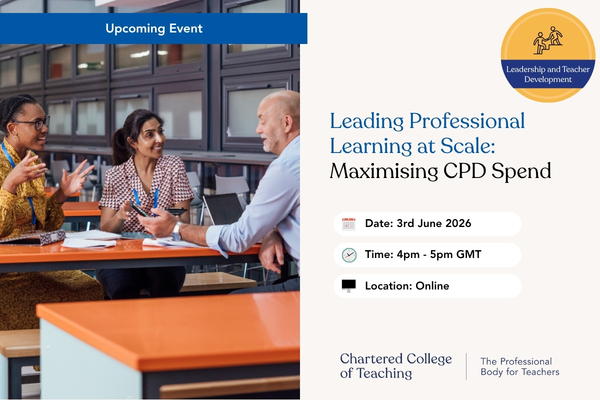
Drawing on findings from the 2025 Teacher Development Trust report on CPD, this webinar will explore how school and trust leaders can take a strategic, evidence-informed approach to professional development. School and Trust leaders will themselves share practical strategies.
Unearthing Structures, Amplifying Voices: A Critical Realist Inquiry into the Lives of Autistic Teachers
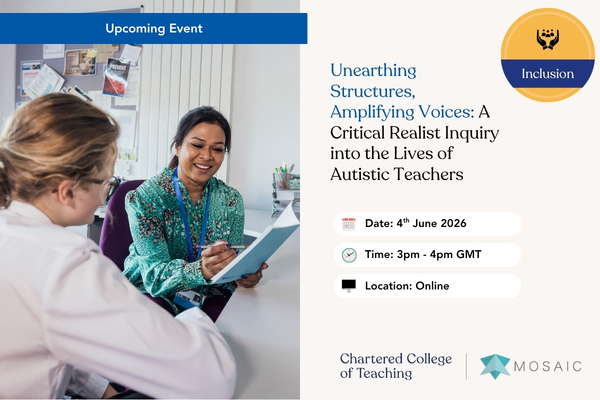
In this webinar, Helen Bowhay, Director of Initial Teacher Education at the University of Nottingham, will introduce the key findings from her research into the lived experiences of autistic teachers in education.
High-quality assessment in primary schools: improving assessment literacy
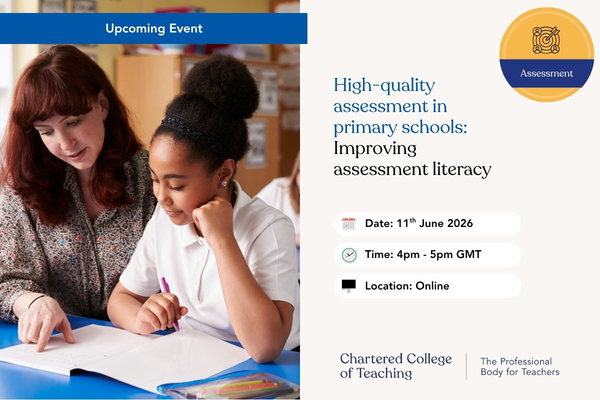
Assessment literacy is having the knowledge and skills to design and use effective formative and summative assessments. In this webinar we will explore the principles of good assessment and also the challenges of implementing assessment for different types of learning in primary schools.